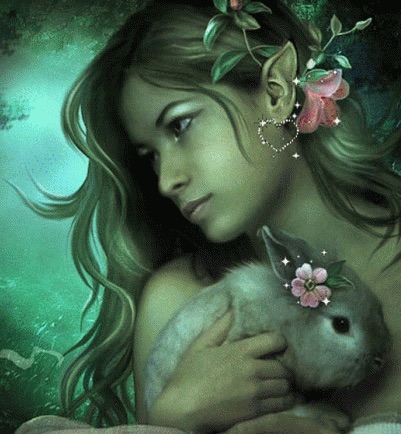
Ahh… Spring and Ostara! Depending on your point of view the spring equinox is the first day of spring. There are other days to consider as the first day of spring, and you can decide for yourself! The Celts acknowledge Imbolc, February 1-2 to be the first day of spring. Many meteorologists use March 1 as the first day of spring. The vernal equinox will occur on March 20, 2025 at 5:01 am and is the astronomical start of spring. The equinox is the time when the sun crosses the equator, and the day and night are about equal length. After Ostara and until Mabon the days will be longer than the nights. To learn more click Ostara. The moon will be a waning gibbous on Ostara this year, and the year is waxing. So magick could be a little bit tricky. During a waxing year it is time for spells about increase and growth, but during a waning moon spells are about decrease and release. If you are going to do magick on Ostara this year, you need to pick and choose which to go by, the lunar phase or the time of year.
Where did we get the name Ostara for this holiday? Eostre is the name of a lesser known Anglo-Saxon/Germanic goddess after which we think Ostara was named. Check out my video to find out some of the ways people pronounce Eostre.
It is thought that both Ostara and Easter are named after Eostre. Try saying those three names, and you can see how they are similar. What is now known about the pre-Christian traditional ways of celebrating Eostre? Not much, really. The 8th century English monk Bede wrote that the month which corresponds with April bore her name. What is problematic with this is that the vernal equinox occurs in March, the old name of which was dedicated to a Goddess named Hretha. Other records are nearly non-existent because permanent records were not kept by pre-Christian Pagans. This lack of evidence gives rise to speculation, but at the same time should not invalidate the practice of honoring Eostre. The practice of working with deities evolves, and has been for thousands of years. We must not delude ourselves into thinking that we work with Eostre in a traditional manner, because we do not really do not know her history that far back in time. But, we can work with her in the full knowledge that her history has evolved. Images of Eostre exist which were created within the past 150 years. Eostre is usually depicted as a maiden with a long white dress and flowers in her hair. A hare is often present in the image as well. In a fairly recent story a bird sustained a serious injury, and Eostre saved its life by changing it into a hare which retained its ability to lay eggs, and fabulous eggs at that! Thus, we have a story of the Easter Bunny. This story may be relatively new, but the practice of dyeing eggs around this time of year dates back to ancient Egypt. If you like to dye eggs this time of year, you may want to check out the use of natural dyes. To learn more click https://www.allrecipes.com/article/natural-easter-egg-dyes/. Alternatively there is a very creative way of transferring prints from silk ties to eggs. Ties with interesting bold prints work the best. Since it is not known if the dyes used in the ties are food safe, eating the eggs is not recommended. But you can dye blown out eggs. If interested in learning more click https://ourbestbites.com/silk-dyed-eggs-aka-tie-dyed/. If you are feeling up for a challenge try making the beautiful Pysanky eggs. YouTube has videos to learn more.

As Wiccans, Witches, Pagans and those who honor the Goddess and/or God we have varying views of deities. Some view each god or goddess as a very specific deity. Others view deities as more generic or simply the Goddess and the God. Some do not work with deities at all. Each view is correct for the individual practitioner. I like the view of deity being like a multi-faceted stone representing deity as a whole but with the many facets as the faces and personalities of the deities. In the world of those who practice Earth centered religions, a deity is not viewed as far off in the heavens somewhere. Rather deities live in our hearts, bodies and in the natural world.
How do you go about working with a god or goddess? First you meet the deity. You might have a feeling in your gut that draws you to a specific deity. You may have needs that a specific deity can help you fulfill. A deity may also leave you signs. For example you may keep seeing hares at unusual times or in unusual places in nature. Or you may keep seeing images of hares in art like paintings, prints or in ceramics. If so, Eostre, Artemis or Eros could be calling you. Know that you can decide whether or not to work with a deity, even if the deity has left signs for you. After meeting a deity, what next?
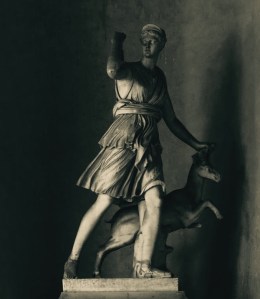
Like so many relationships this would be a time to learn about the deity, test the waters and see if this is a relationship on which to build. Both research and find out through experience what this deity is like. It is usually best to start the relationship with a deity slowly. It takes time for you and the deity to get to know one another. How long do you want this relationship to last? It could be any specific amount of time such as one lunar month, a year and a day or a lifetime. If at the end of the period of time you can part ways or choose to continue the relationship. I use the words “work with” and not “worship” as a descriptor of how I interact with deities. I invite deities to walk with me as we journey through life, and to me they are like mentors. How can you communicate with deities? Speak with them through trance, meditation or in your dreams. You might also use a pendulum for yes or no answers from the deity. You could use oracle cards, tarot cards or runes to provide answers from the deity. Or you could ask the deity to leave you signs. Some of these methods of communication take more time and patience than others. To please the god or goddess dedicate altar items or create a shrine. Research the deity well to know what kinds of items or shrines the deity would appreciate. If you work with multiple deities use items dedicated to each deity separately and if putting up shrines, build shrines for each deity separately. Give items dedicated to each deity some space, especially if the selected deities do not get along with each other. Treat the deity with respect and gratitude. Offerings say “please,” and “thank you” and show that you care. To learn more about offerings click Offerings: Honoring the Gods and Other Beings. Do not forget to establish boundaries with the deity. This will help protect you and help make sure that expectations are met. Do prior research of the deity. For example you might decide to work with a deity who happens to be a trickster like Loki. Be prepared for some of Loki’s tricks to emerge. You may cast a circle before entering the worlds of the gods and goddesses. Very importantly a deity should not ask you to do harm. If the deity does do that, do not harm others and reevaluate the relationship. It may very well be time to move on from that relationship. Like many relationships working with a deity can be very rewarding and benefit both you and the deity. How can this relationship benefit the deity? You can do wonderful acts in the deity’s name. And as Rick Riordan, author of young people’s fiction like the Percy Jackson series so poignantly illustrates, dieties are only kept alive when we say their names.
Deities you could call upon in addition to Eostre for the spring equinox include Freya, Osiris, Ashanti and Artemis. Most pantheons have at least one goddess or god of renewal and spring. A pantheon is a system of deities from a specific country or culture. It is important to learn as much as you can about the society and to practice cultural traditions of that pantheon respectfully. If your upbringing has not included the traditions of the culture you are which you are interested in, research and even look for an expert of that society. Many of us have ancestors who were immigrants, and we were brought up far from our ancestral roots of another country. If we chose to work with a deity who our great grandparents might have worked with, we may still need to learn about the culture. As you make a decision be mindful of cultural appropriation. For a thoughtful article click this link: https://www.patheos.com/blogs/panmankey/2020/02/wicca-cultural-appropriation. Working with deities while practicing appreciation for that culture can be a satisfying but a complex venture.
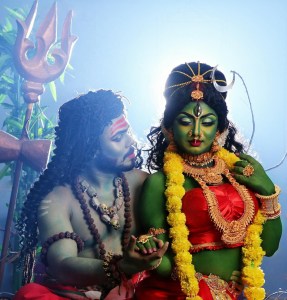
In Wicca a word often used to define one concept of deity is “polarity.” It describes the divine feminine and the divine masculine aspects of deity. There are issues with this concept of polarity. For the LGBTQA+ community the problem arises over the heterosexual relationship between the Goddess and the God and honoring that association. Another issue revolves around patriarchy, abuse and religious trauma. Many were brought up in Abrahamic religions in which the one male god was considered to be almighty, authoritarian and was easily punitive. There are people who suffered abuse in the name of one of these gods. There are also many who were only welcomed into the fold of family and community if they believed in their god. The later was my experience. As a child I was regularly dragged by my parents to church with the expectation that I would believe in their god. My grandparents hosted a foreign exchange student from India and my grandmother said, “If only she knew the Lord, then she would be welcome into heaven.” I wanted to bang my head on the table or argue, because I knew that both she I believed differently from my grandmother. But I did not dare because I knew I would be punished. This kind of experience is called religious trauma. I know that there are many with similar experiences. To this day these experiences affect my ability to connect and work with the God even though he is a lot different from the almighty gods in Abrahamic religions. He is viewed as a horned being like a stag who goes through a yearly cycle of being born, mating, death and rebirth. For some members of the LGBTQA+ community, those with abuse and religious trauma I can see the attraction of primarily working with the Goddess. In Wicca practicing mostly with the goddess is called Dianic. To learn more about Dianic practice click https://www.learnreligions.com/what-is-dianic-wicca-2562908. This is not to detract from the God as he is known in Wicca and Paganism. He is a partner to the Goddess in the dance of life and death. To learn more about the God click https://thekeeperspath.com/2013/07/04/the-divine-masculine.

Things you could include in your practice on Ostara are dyeing eggs, balancing eggs on end, decorating with flowers and honoring abundance and the return of light and warmth. When thinking about abundance, eggs are important. Hens lay eggs when they receive 14-16 hours of daylight. In the days before electricity with which to light the hen house, eggs were scarce in the winter. Thus the egg is celebrated this time of year. Find flowers in bloom in your location and decorate your home, or put a wreath on your door or on your head. Hares and rabbits are prolific animals, having 2 – 7 litters in a year. An image of a hare or rabbit such as a chocolate rabbit would do nicely on your altar. Of course it is a good time to plant seeds as well as intentions. When I create a home for a plant, I like to plant a crystal and intentions. Because the sun rises due east and sets due west on this day, you can find directions on a piece of land without a compass. Since the equinox takes place in the morning in many locations this year, you might want to greet the sunrise on Ostara. If you want to learn some science about Ostara, click Ostara: Some Science.
Bright blessings to you on Ostara, and enjoy this time of balance and increasing light. And to my friends in the Southern Hemisphere have a fruitful second harvest and blessed Mabon.
Auburn Greene
Suggested Investigation:
Beattie, Rebecca. “Meeting the Gods, a.k.a. How Do I Find My Deity?” Dr. Rebecca Beattie, April 18, 2021, https://www.rebeccabeattie.co.uk/post/meeting-the-gods-a-k-a-how-do-i-find-my-deity.
Greaves, Vanessa and All Recipes editorial team. “How to Make 9 Natural Easter Egg Dyes.” All Recipes, January 14, 2021, https://www.allrecipes.com/article/natural-easter-egg-dyes/.
Lary, Morris H. “Eostre: The Mystery Goddess Who Gave Easter Its Name.” History Cooperative, December 9, 2022, https://historycooperative.org/eostre/.
Mankey, Jason. “Wicca Cultural Appropriation.” Raise the Horns, February 24, 2020, https://www.patheos.com/blogs/panmankey/2020/02/wicca-cultural-appropriation.
Oliveria, David. Episode 85, “What Is Hard or Soft Polytheism? Which One Is Right for Me?” Magick and the Moon, September 25, 2023. Podcast.
Patterson, Rachel. “Working With Deity.” Rachel Patterson, September 19, 2022, https://www.rachelpatterson.co.uk/single-post/working-with-deity.
Serpent, Lady. “The Divine Masculine.” The Keeper’s Path, July 4, 2013, https://thekeeperspath.com/2013/07/04/the-divine-masculine.
Solaris, Samantha. “Deity Communication/ For Beginner Pagans & Witches.” Samantha Solaris, February 16, 2022, YouTube.
Wells, Sara. “Silk Dyed Eggs (aka TIE-Dyed!)” Our Best Bites, January 23, 2023, https://ourbestbites.com/silk-dyed-eggs-aka-tie-dyed/
Wigington, Patti. “Dianic Wicca.” Learn Religions, September 9, 2021, https://www.learnreligions.com/what-is-dianic-wicca-2562908.



 My Inner Wiccan