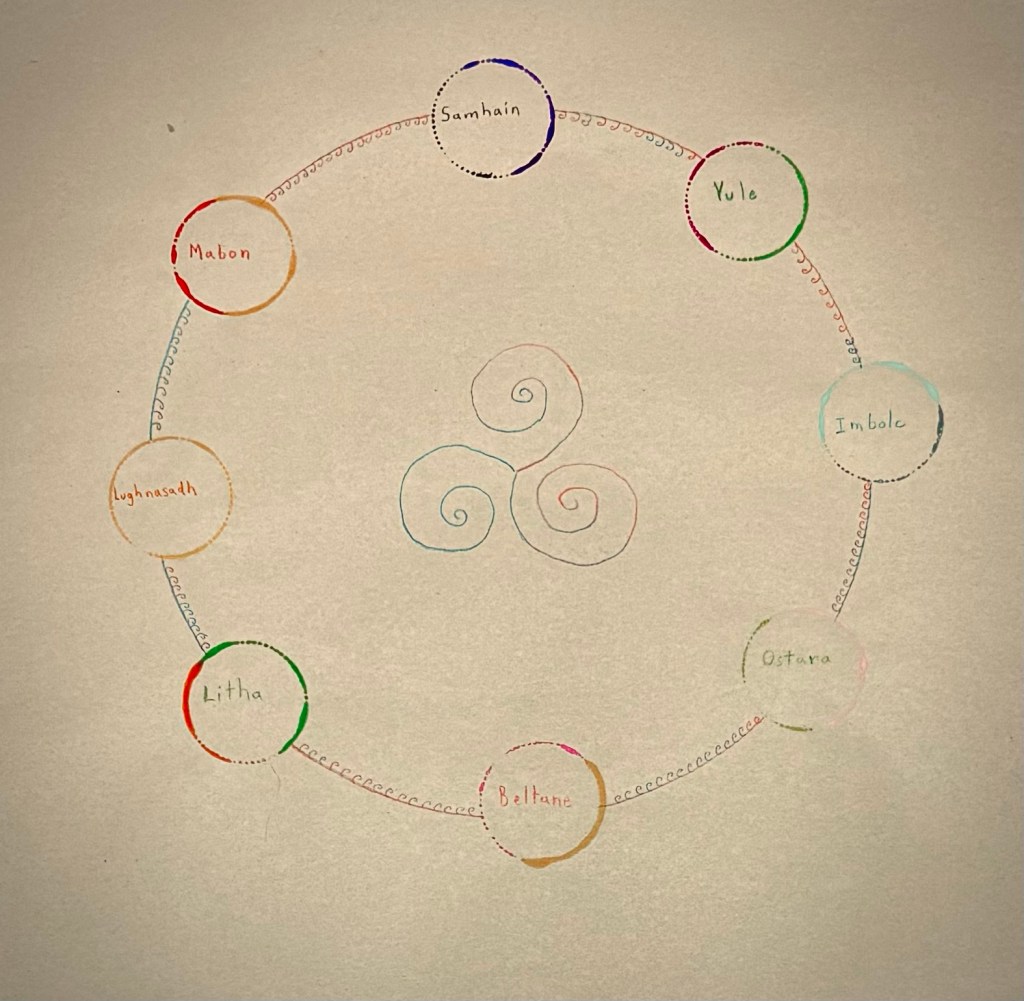
How would you view this celebration? I can point out different perspectives, but how you see it is up to you. I’ll begin with a brief review. In the Celtic practice Lughnasadh starts on the evening of July 31 and ends on the evening of August 1. The other three holidays that go from evening to evening like this are Imbolc, Beltane and Samhain. All four of these holidays called cross quarter Sabbats are especially important to the Celts. Lughnasadh falls midway between Litha and Mabon. On the opposite side of the Wheel of the Year lies Imbolc. This timing means everything.
Lughnasadh is named after the God Lugh, who was skilled with weaponry, crafts and words. This is the time of year for games, fairs and striking deals. We can enjoy the Olympics from July 26 – August 11 this year. You, too can partake in games and sports to celebrate such as swimming, cycling and tug-of-war. This is a great time for artisans and crafts. Consider creating crafts of your own like a corn dolly or visiting a craft fair. This is a traditional time of year to perform short-term marriages, conduct business and create contracts. Reflect on a change you want to make for yourself and how to accomplish it. After reflection you can create a contract for yourself to make it happen. All of this activity and starting to bring in the harvest makes this a busy and productive time of year.
A traditional view is that this is the first harvest, and among the plants to be harvested are grains. You can take this opportunity to make things out of grain. I would like to start by discussing crafts. One beautiful craft from Europe is creating corn dollies which are made from the straw of wheat, barley, oats or rye. A wee bit confusing? Corn that we know of as yellow kernels on a cob is a plant of the Americas. The Old English word “corn” referred to cereal grains grown in Europe. A different kind of dolly can also be made from corn husks native to the Americas. YouTube has many how to videos about making different kinds of corn dollies. In our spirituality we are encouraged to use materials that are locally available. To celebrate this season feel free to make a dolly of straw or husks that you can easily find.
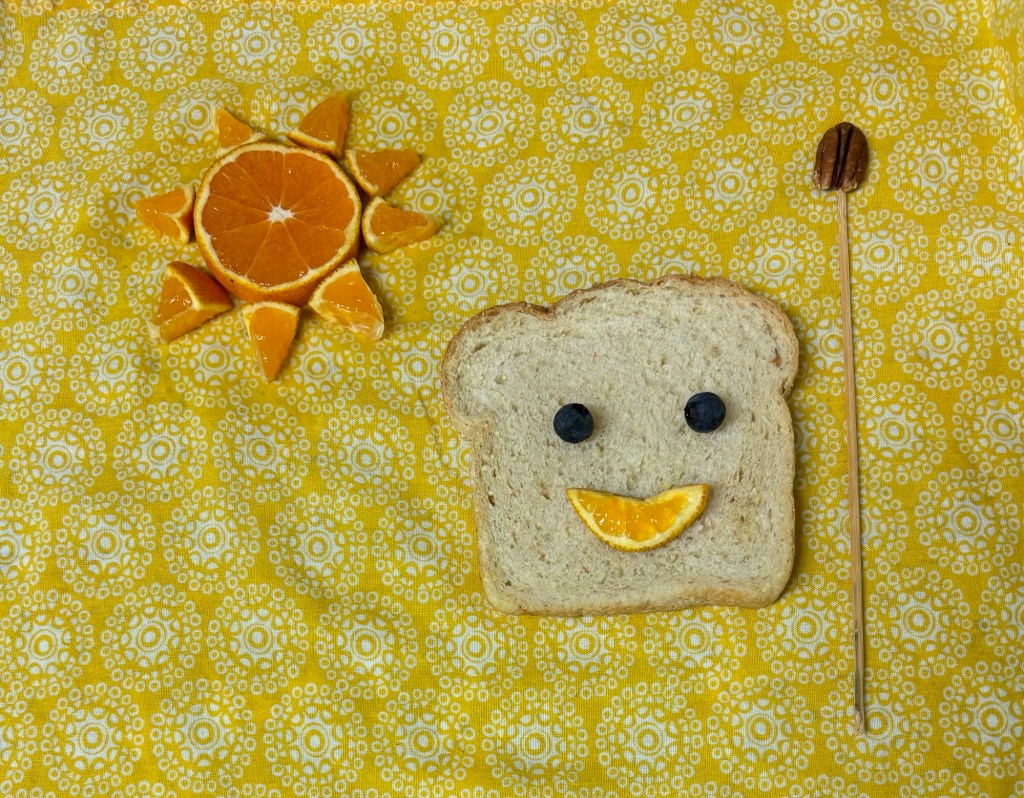
This is a wonderful time to make your favorite yeast or soda bread. You can even make the bread in the shape of a person to honor Lugh’s sacrifice to the land. Note that soda breads are easier to make than yeast breads, so evaluate your baking skills while choosing a recipe. If you have a garden, you may consider making an offering to your land on Lughnasadh or sometime during the harvest season. It is also a good time to appeal to the Gods for no harm from blight. Blight can ruin your year! Our world is highly dependent on mono-agriculture, which means growing the same varieties of plants on a given area of land. Visualize miles and miles of wheat fields and avocado orchards and you get the idea. Diversification of crops is the best insurance against blight. If one variety of crop fails from blight, there are others that will not. Let us also treat our grains and bodies as sacred and think about organic. Unless they are certified organic, most grains are harvested with the use of Roundup. Yikes! Although it is a bit pricy, purchasing organic grains may be worth it to you. What do you do if you cannot eat gluten? I have to eat gluten free, and I understand. It is very important to honor your health, and the Gods will not abandon you. There are very good gluten free breads available made from grains such as millet, buckwheat and rice, and they are perfectly acceptable for Cakes and Ale. Recipes for gluten free yeast and soda breads are available online as well. Along with grains other crops are ready for harvest such as berries, apples and many herbs.
This is a time of transition. The harvest is starting, and preparations for the dark half of the year are beginning. Preparations are being made for “back to school,” and the lazy days of summer are starting to wind down. Registration for fall classes and workshops are underway. By Mabon these autumnal activities will be in full swing. Samhain then signals the start of the dark half of the year, and in a traditional agricultural society rest is well deserved. But, with Yule coming and family, travel and festivities involved, that may be questionable these days!
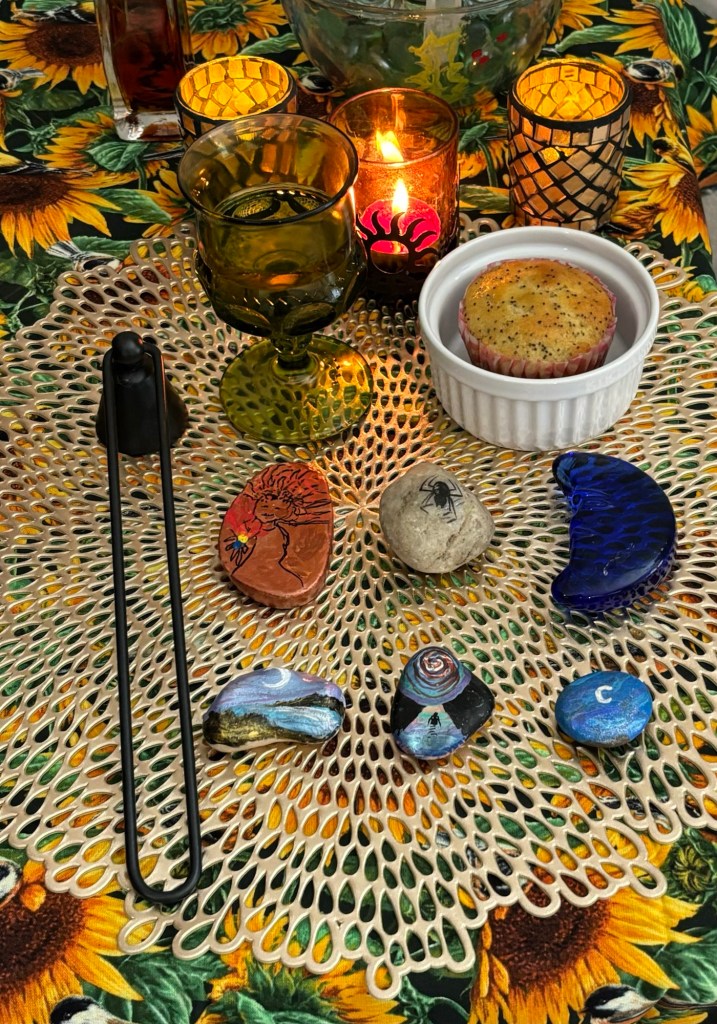
The growing season though still strong is starting to wind down. The Celtic view is that this the first day of autumn. Meteorologically the first day of fall is September 1 and astronomically it is on the Autumnal Equinox. We are about six weeks past the longest day of the year, yet it is often hotter than the Summer Solstice. Why is that? This question is answered by a phenomenon known as seasonal lag. Simply put, even though the days are waning now in the Northern Hemisphere, there has been a build up of heat in the atmosphere and oceans since spring. That build up reaches its peak sometime in late July and early August. This happens because water and water vapor in the atmosphere retain heat well. The argument then can be made to choose Lughnasadh to be called Midsummer rather than giving that title to the Summer Solstice. The same kind of idea applies to Midwinter. Is Midwinter defined by the length of the day, as the shortest day is on Yule? Or is it defined by the temperature during Imbolc which is often colder than Yule? I feel there is no one right or wrong answer, but I would make an argument for consistency. Either the Solstices may be called Midsummer and Midwinter, or Imbolc and Lughnasadh may be viewed as Midwinter and Midsummer. So what you call Lughnasadh depends on your perspective. You may want to look into the climate in your local area when making that decision.
Of the elements I choose Fire in my view of Lughnasadh. The weather is hot, and the sun is still strong enough that many of us need sunscreen. You can recognize Fire for this celebration by lighting a bon fire or candle, baking bread or having a cookout. Take time to remember how important fire was to our ancestors and is for ourselves in cooking food and creating light, safety and more. I view Fire both as a dancing flame and the electricity that we use today. If a lightning bolt is considered to be Fire, then the electricity in our power lines and batteries is Fire, too.
Note that this year on Lughnasadh the moon is a waning crescent. In fact she is just a sliver.
Celebrate and have a meaningful Lughnasadh! To those in the Southern Hemisphere have a blessed Imbolc!
Auburn Greene

 My Inner Wiccan
wow!! 37The Harvest Moon and Mabon
LikeLike