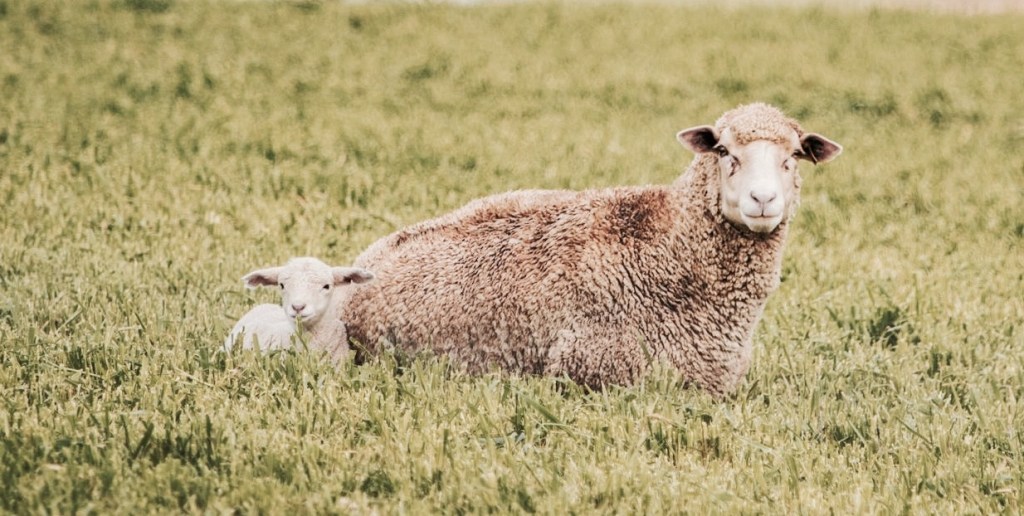
We recently honored the Samhain and Yule holidays. But what about upcoming Imbolc? It does not get as quite as much attention as some of the other holidays. But beginnings are honored and practiced at this time which make it a very important observance. Imbolc means “in the belly” and is the lambing season. It is usually celebrated on February 2, but in the Celtic world it is observed on February 1 – 2 ending at sundown on February 2. Some people celebrate Imbolc on a date closer to February 5, because that date is more centered between Yule and Ostara than February 1 or 2. Since the dates for Yule and Ostara change each year, that date in between them changes too. In Celtic culture Imbolc is considered to be the start of spring. Some persons celebrate it as the start of the new year, because it is a time of beginnings. Imbolc is traditionally a time to honor beginnings, the strengthening of the sun and the Goddess Brigid. On Imbolc one can start to plan for a garden and to collect and bless seeds. As a celebration of beginnings it is a time to set in motion the transformation in one’s life. As the start of spring, Imbolc is an opportunity for spring cleaning. On Imbolc one can formally start the study of Wicca, Witchery, Paganism or other Earth-centered religions as well as to a goddess or god. Imbolc is an auspicious time for starting new projects, especially since the moon is a waxing crescent commencing on January 30, 2025.
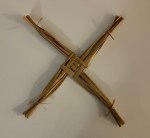
Brigid is a pre-Christian Celtic goddess who is traditionally honored on Imbolc. Her name has many different spellings with a variety of pronunciations. I pronounce her name as “Breed.” Brigid means ‘Exalted One.” Her father was the Dagda which makes her a member of the Tuatha de Danann, and her mother was a slave. She was born at sunrise over a threshold which is considered to be a place in between worlds. When she was an infant her mother found the shack in which they lived on fire. She ran to save Brigid, and it turned out that her home was not on fire, but the illusion was from the radiance emanating from Brigid as she slept. She is considered to be a triple goddess by some often pictured with three faces and bodies. She is a solar goddess who is a healer, midwife, artisan, poet, bard, warrior, metalsmith and a patroness of oak trees, swans and cattle. She is highly proficient in all these specialties. In my mind, she is very multifaceted goddess, however her aspects can be distilled into three: healing, inspiration and fire. Also three is her sacred number. There are stories of her generosity in which she gave to the poor and did not tolerate greed. She shaped her life to become a powerful abbess of a monastery in which both men and women lived and worked. One of her symbols is a Brigid’s cross. To learn more click Imbolc: How Do I Make Brigid’s Crosses? She was sainted by the Church which allowed her name and reverence to survive the Christianization of Europe. She is truly a complex goddess, and there are wonderful reasons to align yourself with Brigid should you choose her. She can help you break out of societal stereotypes and use your gifts well. She encourages you to heal both your feminine and masculine selves. She teaches compassion. For these reasons and others many people choose to work with and honor Brigid.
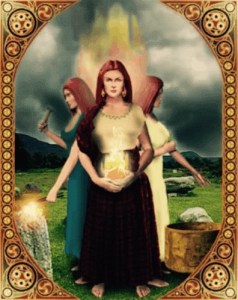
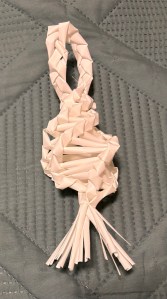
A corn dolly is traditionally made to represent Brigid. The word “corn” means grain in Old English and does not necessarily mean corn as in the plant of the Americas. The stalk or husk of any grain can be used to make a corn dolly. Some are representational and some are abstract, but all are valid with which to honor Brigid. YouTube has videos which show how to make corn dollies with wheat stalks, reeds, drinking straws and corn husks. I think it is simpler to make the corn dollies out of wheat stalks than corn husks. To make them out of drinking straws look for straws that are made out of paper, are as long as possible (12 – 20 inches) and that do not have a crimped bend. The color of the straws is up to you. The dolly is then traditionally clothed in white. A wand with a tip is used to represent the God. The tip is often an acorn, giving it a phallic look. The two are put in box or basket as a bed which is usually set by a fireplace on the night of February 1. On the morning of February 2, the ashes around the fireplace are inspected for traces of movement. Nowadays with many homes not having fireplaces, the bed may be put by the stove, furnace or representation of a fire or fireplace. This is a way to honor the fertile aspects of Brigid and the god and fertility in life.
There are wells in Ireland dedicated to Brigid, and if you are lucky enough to book a flight to Ireland, you might seek out one of those wells to visit. I’m told that it can be a healing and transformational experience. But if you have a well near you, you may want to visit it on Imbolc and leave an offering and prayer ribbon also known as a “clootie” in Scottish on a nearby tree. Suitable offerings might be milk, bread, candles or coins. If the well you want to visit is on someone else’s property, ask for permission first. If no well is nearby, you may visit a body of water such as a spring, river or lake. If none of those water features are convenient to you, you can always consider the plumbing in your dwelling to be that water source. Leave an offering and hang a clootie near the bathroom or kitchen sink. Brigid’s blessing of water includes all water, especially fresh water, so you can partake of the blessings.
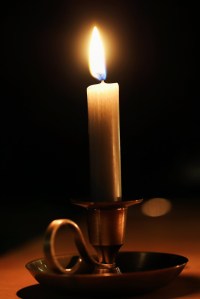
Imbolc is a fire festival honoring both the strengthening sun and Brigid, but the fire traditionally used is candlelight. Both Imbolc and the waxing moon are auspicious times for making candles. Traditionally white candles are burned on Imbolc. White represents snow, purity of beginnings and a blank page to use in renewing life. A splash of red or pale green may also be used, with red representing the womb or sun, and pale green representing new plant life just starting to stir. I like to use pale blue, as it represents the color we sometimes see in ice and snow. To learn about candle making click Candles. Imbolc is also a time for blessing candles. If you have a trip planned to Kildare, Ireland, put candles on your packing list. You may bless them by Brigid’s flame there. Or you can try this candle blessing at home. Simply fill in the blanks to tailor it for what best suits your practice.
Simple Candle Blessing
Oh, wonderful ________________ (Universe, God, Goddess or a deity name)!
Please bless these candles that their ______________ (flames, glow, warmth or light) will fulfill their intended purpose. So Mote It Be.
I like the idea of a seed candle. You store the blessed candle in a box or drawer with other candles and it will bless those candles by its proximity to them. Remember to trim the wicks, consecrate and charge your candles before use. It is traditional to light candles so that each room in the home is lit at sundown on February 1. However, fire safety measures call for you to attend each candle as it burns. One suggestion is to carry one candle from room to room. These are activities you can do to honor the returning light of the sun and Brigid.
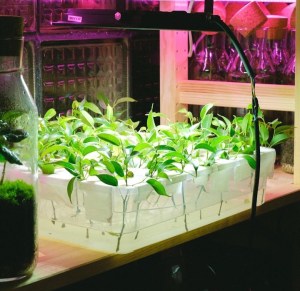
I remember my dad planning his garden, ordering seeds from the Burpee Seeds Catalogue and starting the seeds indoors under fluorescent lights in February to get a good jump on his garden. Imbolc is a wonderful time to get a start on your garden. Plot out what you plan to grow, obtain seeds and bless them. You may even start growing the seeds in February as well. Autumn Willow, author of Flying The Hedge has a beautiful seed blessing you can do as you plant the seeds. To learn more click https://www.flyingthehedge.com/2021/04/seed-blessing-ritual.html. Pay attention to the moon phase for planting seeds. Plant annual above the ground crops such as spinach, tomatoes and peas during the waxing moon. Plant perennials and root vegetables like carrots and radishes during the waning moon. Starting your plants early can help you maximize the growing season that you have. Imbolc is also time to bless tools for our gardens as Terri Conroy host of Danu’s Irish Herb Garden reminds us. You may want to bless your land or garden on the full moon which is February 11, 2025.
How would you transform your life? Light a candle and/or some incense, meditate and write in your Book of Shadows a list of changes you need in your life. This is a good time for brainstorming. After brainstorming select those changes that you want to concentrate on making. Select those that achievable and choose only 2 or 3. Write down what success looks like and your goals in concrete terms. For example how many pounds lost or gained would put you at a healthy weight? Write or draw on a separate piece of paper what the future you will look like with those changes made. Put that up on a mirror or somewhere where you will see it every day. It is important to think of yourself in terms of that future you. If you do, success will come more easily. However do not forget to live for today and take joy in your life. Silence that inner voice that sabotages you which may say that you are not good enough or that these circumstances made your life a mess. Give it positive things to say instead. For example say “I am a worthy person and have the power to change my life.” Develop plans both magickal and mundane. Remember that the magick will help. But if you do not do the hard work in your life, those changes will not happen. For example if you want that job, burn a green candle, but also create your resume, fill out applications and brush up on your interview skills. This is a time to take control in your life and create a life that is best for you. If you do that, it will be better for those around you too. Little by little you can transform yourself!
For some people spring cleaning is exciting with the prospect of a fresh clean dwelling. For others it is a drag. I like to add peppermint to water for mopping and wiping hard surfaces. You can also add salt or lemon, be it lemons that you simmer or essential oil. I sometimes spray the carpet with salt water or peppermint water in a spray bottle. What I like about peppermint is that it is a natural repellent to bugs. Simply add your intentions along with ingredients to the water. You can also smudge the rooms with incense or sound. For incense cedar is a good but not the only choice. For sound I like to use a singing bowl or bells. You can sweep energies out with a besom. These are some ways of cleaning and cleansing both mundane and magickal that can be helpful.
Are you new to Wicca, Witchery, Paganism or other traditions honoring the Goddess and/or God? Imbolc is a great day to formally start study of the path in which you have an interest. Traditionally the time period of this study is a year and a day. This is a good trial period, and at the end of this duration, you can make a decision about further commitment and have a self dedication ritual. Similarly Imbolc is a traditional time to begin study of or dedicate yourself to a particular goddess or god to whom you feel drawn. Just make sure you can and will keep any promises you make to the deity. Deities expect promises to them to be kept, and they will hound insistently you until they are met. Only make commitments and promises as you are ready to do so. During the time of study research the god or goddess fully so you know what approach to take to that deity. Know what color candles to use, what a shrine would look like, what kind of offering to make and so on. Learning the stories helps you become more acquainted with the deity. Think about what the deity really appreciates. For example, who would appreciate pink roses, Mars or Aphrodite? Dedicating yourself to a deity requires a lot of research and forethought which is why the period of study is a year and a day. But, if you are ready, Imbolc is a wonderful time to make that dedication. The process of dedication can be a bit intimidating but also very rewarding. Anna, editor of a Llewelyn blog presented a ritual by Laura Tempest Zakroff which is a good template for a self dedication ritual. To learn more click https://llewellyn.com/blog/2019/01/a-witchs-ritual-of-dedication.
To learn more about Imbolc click The Many Ways to Celebrate Imbolc.
Have a blessed and meaningful Imbolc! To my friends in the Southern Hemisphere have a fruitful first harvest and blessed Lughnasadh!
Auburn Greene
Suggested Investigation:
Anna. “A Witch’s Ritual of Dedication.” Llewellyn, January 19, 2021, llewellyn.com/blog/2019/01/a-witchs-ritual-of-dedication.
Boeckmann, Catherine. “A How-To Guide to Gardening by theMoon: Learn How to Garden and Plant by the Moon’s Phases.” The Old Farmer’s Almanac, November 19, 2024, Last updated.
Conroy, Terri. “Imbolc – Customs & Traditions, Blessing Tools.” Danu’s Irish Herb Garden, YouTube, 11 months ago at time of posting.
Crosson, Monica. A Year in the Enchanted Garden: Cultivating the Witch’s Soul with Spells, Crafts and Garden Know-How, Llewellyn, January 8, 2024. To learn more about this author and her book check out host Debra Rose as she interviews Monica Crosson on Circle Talk, Circle Sanctuary Network Podcasts, May 5, 2024.
Fox, Selena. “Brigid Fire.” Nature Mystic, Circle Sanctuary Network Podcasts, January 19, 2020.
Fox, Selena. “Brigid of Sacred Waters.” Nature Mystic, Circle Sanctuary Network Podcasts, January 17, 2021.
Oliveria, David. “Imbolc/Brigid’s Day,” Bonus Minisode. Magick and the Moon.” January 31, 2022. Podcast.
Pointer, Sally. “How to Make a Corn Dolly,” YouTube, August 8, 2019.
Weatherspoon, Lunaea. Tending Brigid’s Flames: Awaken to the Celtic Goddess of Hearth, Temple, and Forge, Llewellyn, November 8, 2015.
Weber, Courtney. Brigid: History, Mystery and Magick of the Celtic Goddess, Weiser Books, May 1, 2015.
Wigington, Patti. “Self Dedication Ritual for Solitary Pagans.” Learn Religions, February 8, 2021, learnreligions.com/self-dedicatio-ritual-2562868.
Willow, Autumn. “Garden Blessing Ritual.” Flying the Hedge: A Modern Approach to Hedgecraft, July 9, 2018.
Willow, Autumn. “Seed Blessing Ritual.” Flying the Hedge: A Modern Approach to Hedgecraft, April 29, 2021.
 My Inner Wiccan