May 1 is Beltane and is grand time for spells about abundance and divination. Since the full moon is on May 1 it is also a good time for celebration of gifts from the Universe and for divination. (Speaking of the moon, have you been keeping up with Nasa’s Artemis program? I have fond memories as a child about the Apollo program and lately have been geeking out about Artemis, space exploration and our closest heavenly bodies.) To learn more about Beltane click HERE. One tool used for divination and spells are runes as well as the Ogham. To learn more about Ogham click HERE. I will take a dive into runes. I started work with the Elder Futhark runes three decades ago. Now when not working with Ogham, I enjoy working with runes.
Runic writing goes back thousands of years ago. For example there is a runic inscription on a stag bone from Spain that dates back to 4000 – 3800 BC. I want to talk about just one runic alphabet, the Elder Futhark and touch on two other related alphabets. The Elder Futhark is an alphabet used as far back as 160 AD as far as we know from archeological evidence. A comb found in Denmark dating back to 160 AD with a runic inscription was found with the word “harja” on it. This may be a name or “harja” may translate to mean warrior. Archeological finds are rare that far back in time, and we can safely assume that the Elder Futhark was in use before 160 AD but we do not know how much further back. Another archeological find from Norway which dates to about 0 – 250 AD is a stone with runes spelling Idiberug which may be a woman’s name or a surname. There is no evidence that runes were used for divination or magick back then.
The oldest runic alphabet is the Elder Futhark with 24 characters in use roughly from 1st – the 8th century AD. This alphabet is most commonly used in modern times for divination and magic, so I will focus on the Elder Futhark in this blog post. But there are two other related alphabets to be aware of. The first one is the Younger Futhark with 16 letters in use from the 8th – 11th century which was used by the Norse and Germanic people. Then there is the Anglo-Saxon Futhorc which was in use from the 5th – 11th century. It has 32 characters with an increased number of characters especially for vowels. These are the three most commonly studied and used runic alphabets.
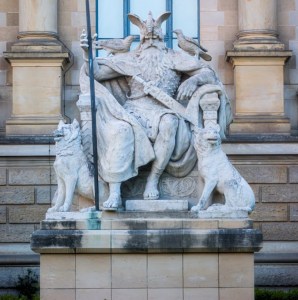
Where did the Elder Futhark runes come from? According to Norse myth the god Odin who was preoccupied with wisdom and knowledge hung him self from the world tree Yggdrasil. He pierced himself with a spear and there he hung for nine days and nights. At the end of this time the runes and their meanings came to him. As the runes, their meanings and their uses flooded his head, he gave a mighty scream, and the rope broke. He gave the runes to humankind. There are theories about where the Futhark came from which are the Greek theory and the Etruscan theory. These two theories have holes. The most accepted theory is the Latin theory in which the runes are more or less based on the Roman alphabet.
Futhark, what a weird name that is! Futhark simply is the first six characters of that alphabet. I know you are counting and are saying that Futhark has seven letters! The th are represented by one character in the Elder Futhark.
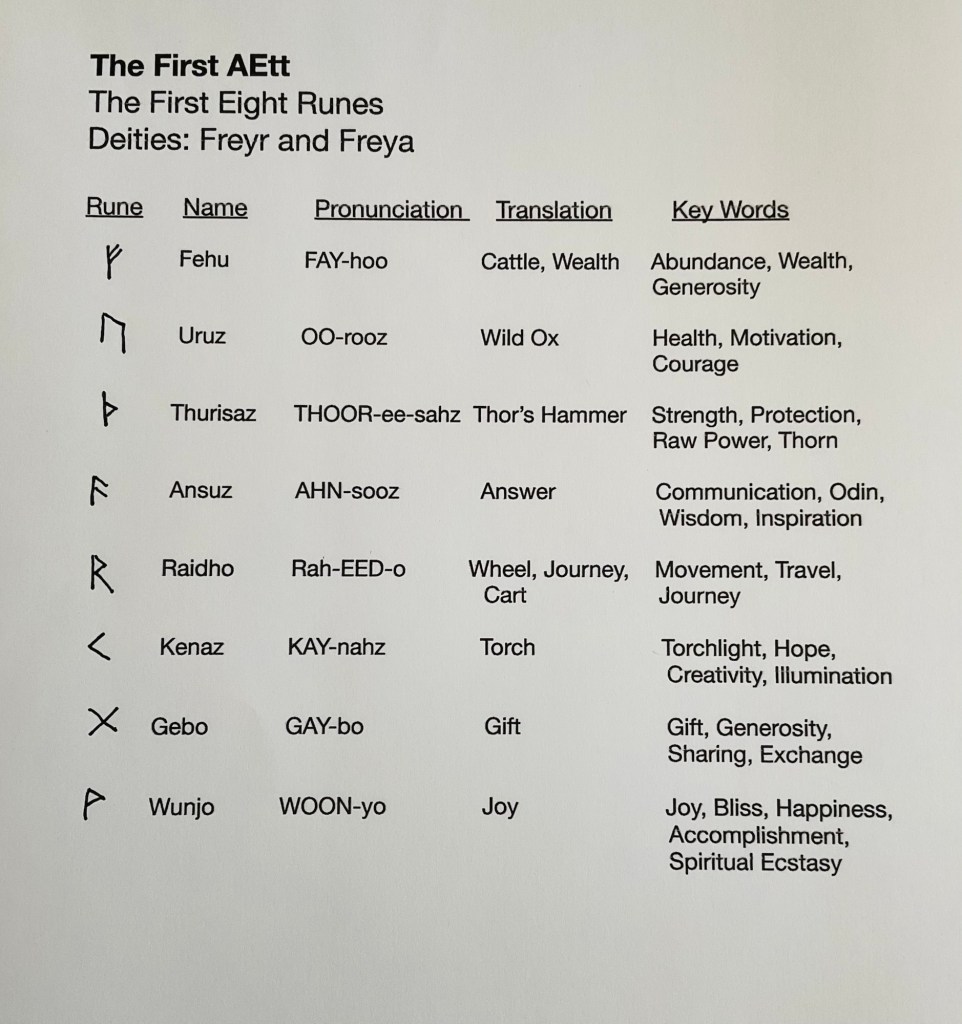
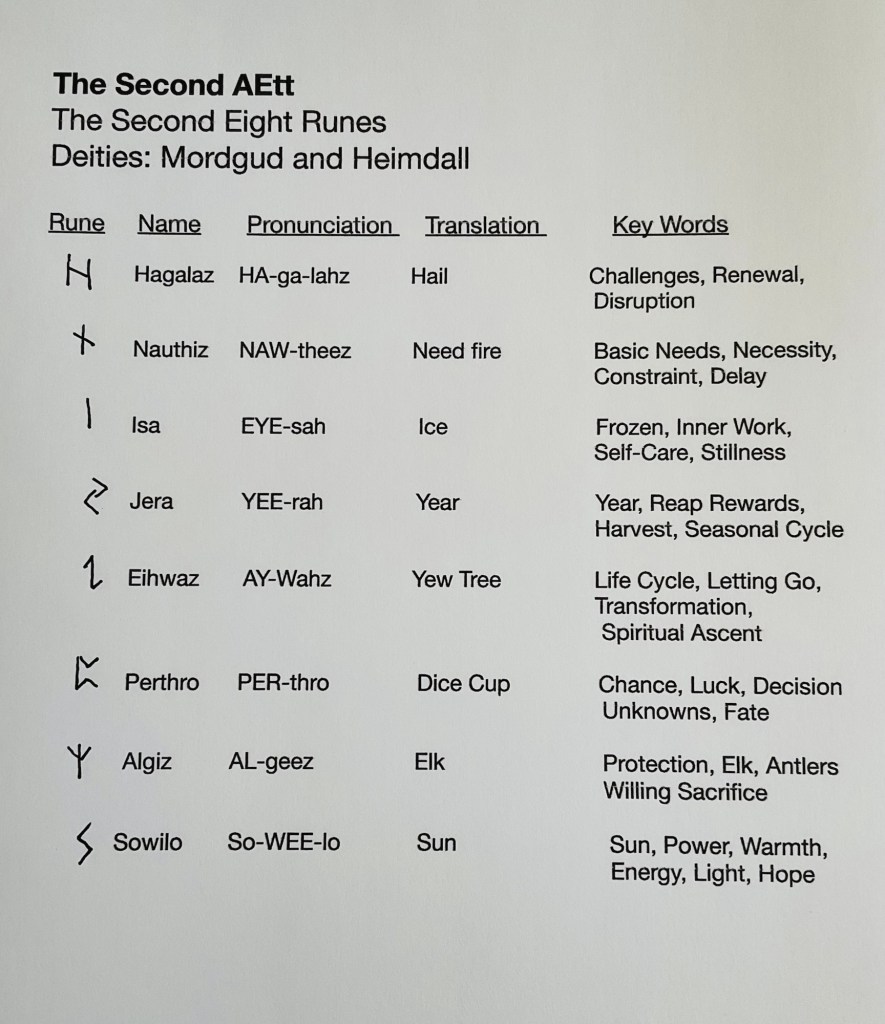
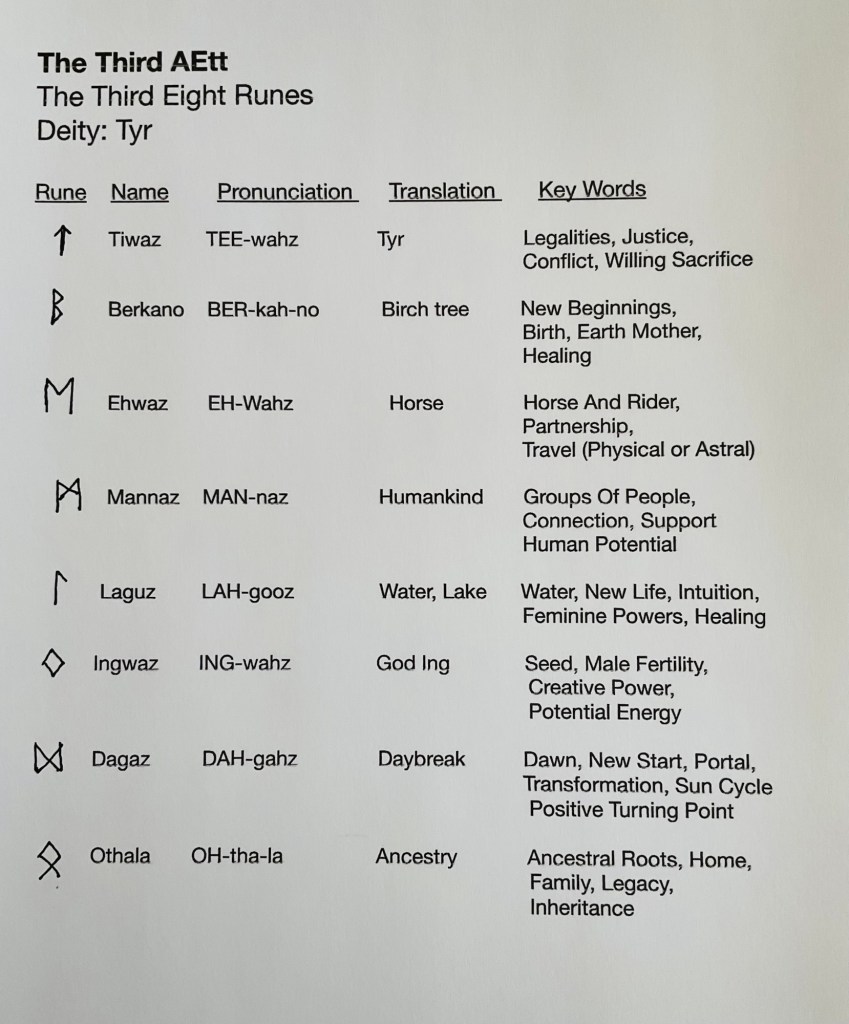
The following three tables of the Elder Futhark runes give you a little insight into the runes, but they only scratch the surface. The runes are organized by aetts, three sets of eight runes, in which the runes are ruled by different deities. Note that I did not include reversed meanings for two reasons. One is to keep the tables simple. Another is that when you first start on your rune journey, you may want to start without using reversed meanings and learn to work with them over time. Also note that some of the runes do not have reversed meanings. These are ones that look the same upside down as right side up. To learn more about the use and meanings of the Elder Futhark runes click HERE and HERE.
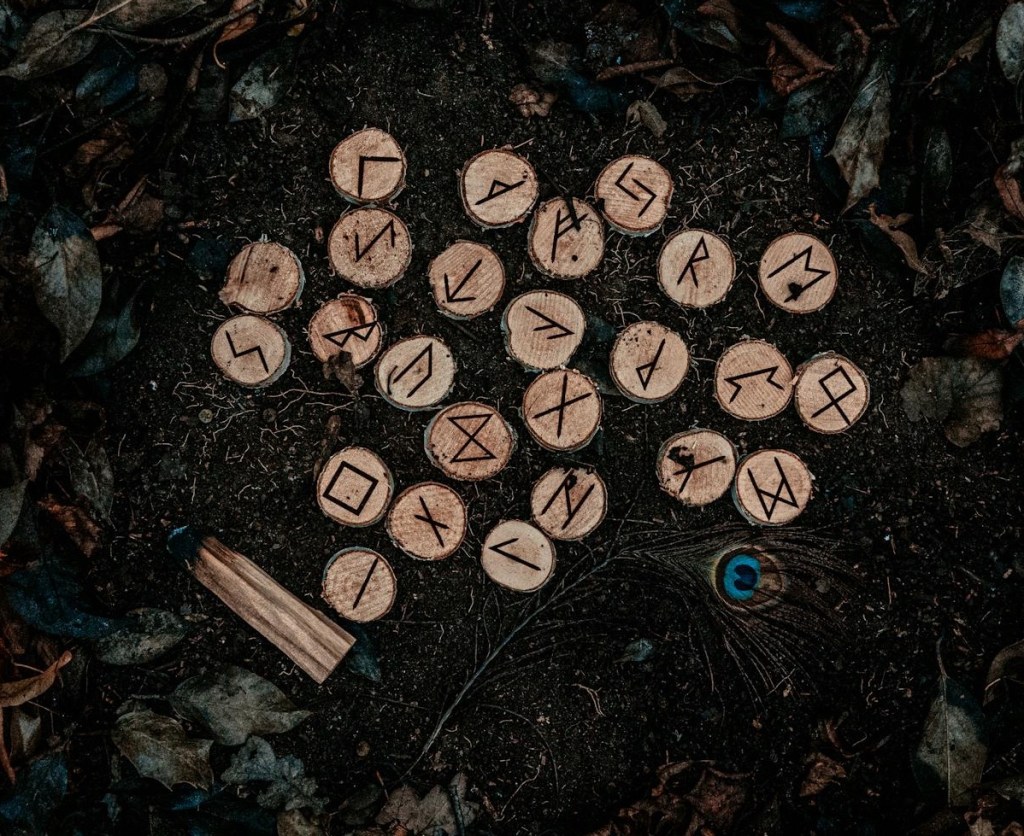
I suggest that you make your own set of runes. One reason is cost. On Amazon they currently cost $12 to $24. Another reason is that you develop a relationship with your set of runes if you make them. You do not need artistic skills to make them, and if you can write you can make them. Simply start with twenty four or more stones, sliced pieces of wood or squares of clay. I say more than twenty four because if you mess up you have a spare. Cleanse your materials before you begin. You may choose to create sacred space before beginning work. Mark the stones, wood pieces or clay tiles that have been fired, baked or air dried using paint or markers. You may use a wood burner to mark the wood. Carve the runes into the clay, and oven bake the clay, fire the clay or let the clay air dry according to directions. If you have a kiln, you may glaze the clay. Choose a bag or other vessel as a home for your runes. Consecrate your rune set before you start using it. From time to time you might charge your rune set under the light of the full moon. Enjoy the process of making your own set of runes!
Get to know your runes by picking a rune a day either randomly or in order. Read about and meditate on the rune you pulled. If you pulled a rune at random journal about what happened during your day and about how it might relate to your rune. Develop a working relationship with your runes.
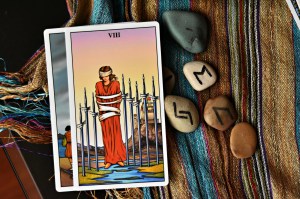
You can use your runes for divination. There are two methods of divination with the runes: layout and casting. I recommend starting with layout first as you become accustomed to divination with your runes. To start with for both layout and casting ground and cleanse before you begin. You may wish to cast a circle to create sacred space for your reading. Make sure to have your rune reading journal with you. Have a question in mind to ask the three Norns who are in charge of the past, present and future. These layouts are influenced by layouts in Tarot cards. As you begin reading runes, you may choose to start with reading all the runes in the layout as not reversed. However for a fuller experience with the runes you will soon need to get comfortable with reading reversed positions. To do a layout pour out all of runes and turn them facing down. Your ancestors, deity or the forces of the Universe guide you hand in picking out the runes. To do a layout start by laying out the runes facing downwards, and turn them over for the reading. Get into the practice of flipping them over from the side like turning pages in a book. The Recent Past is to the left, Present is in the middle and the Near Future is to the right. There is a nine rune spread in which influences of the past, present and future are explored. Another spread you can do is Wheel of the Year in which eight runes represent time marked by the eight sabbats, and one additional rune represents the whole year. Casting involves dropping or tossing a handful or a certain number of runes on a rune cloth. Again your ancestors, deity or the forces of the Universe will affect both what runes you pick and how runes are cast. A rune cloth with a circle on it is used for dropping runes. Those that land outside of the circle or are facing downwards are discarded for the reading. Runes are tossed on a rune cloth. Those that land facing down or land off the cloth are discarded for the reading. For casting runes the past are the runes that are closest to you, the present in the middle and future are furthest from you. Do not be afraid of reversed runes. They point to challenges of the past, difficulties you are currently facing or warnings about what may happen in the future that you can prepare for now. Runes can also be used to add depth to Tarot card layouts, or Tarot cards may add depth to layouts with runes. The meanings of each rune are complex, and to learn more click HERE.
You can also use runes in magick. You can use a single rune in your magick. For example you might put Raidho on the front bumper of your car to ensure a safe and smooth journey. Or you might draw Algiz on your exterior doors and windows with essential oil to protect your home. You can also create bindrunes. A bindrune is two of more runes drawn and put together. For example if you want your luggage to be protected you can put together Raidho and Algiz and draw it on the luggage tags. When drawing a new bindrune practice drawing it on a piece scratch paper before committing to it on the real thing.
If you have gotten this far and you like my post, please click the like button at the bottom. If you want to receive email notifications when I post, please subscribe at the bottom.
To my friends in the Northern Hemisphere have a joyous and blessed Beltane! To my friends in the Southern Hemisphere have a sacred and meaningful Samhain!
Auburn Greene
Suggested Investigation:
Brekke, Wayne. The Complete Guide to Runes: An Essential Reference for Runelore, Meanings, Divination, and Magic, Callisto, June 6, 2023, https://a.co/d/02XOT6EJ.
Paxson, Diana L. Taking Up the Runes: A Complete Guide to Using Runes in Spells, Rituals, Divination, and Magic, Weiser Books, December 1, 2021, https://a.co/d/0b6FPV9R.
Peschel, Lisa. A Practical Guide to the Runes: Their Uses in Divination and Magick, Llewellyn, January 8, 1989, https://a.co/d/02UsxClM. Also available on Kindle, Audible, Goodreads and as an audio CD.
Wigington, Patti. “The Norse Runes – A Basic Overview.” Learn Religions, March 21, 2019, https://www.learnreligions.com/norse-runes-basic-overview-2562815.
Willow. “Elder Futhark Runes: A Hedgewitch’s Guide to Rune Magic.” Flying the Hedge, July 26, 2014, https://www.flyingthehedge.com/2014/07/elder-futhark-runes.html.